Notes from the studio.
Practical guides on AI UGC video, scene planning, vertical short-form and building a content workflow that scales.

App Explainer Videos That Sell: Structure, Formats, and the 30-Second Rule
Most app explainers describe the product. The ones that sell follow a four-beat structure, pick the right format, and respect the 30-second rule. Here is the playbook.

Shopify Product Video Without Filming: 15 Minutes, No Camera
Your product photos already contain everything a product video needs. How Shopify stores turn stills into scroll-stopping reels and UGC ads — no camera, no studio, no reshoots.

Looking for a Creatify Alternative? A Practical Comparison for App Teams
Creatify is built for high-volume ad variations. If you are marketing an app or SaaS, you may need a different shape of tool. An honest comparison to help you pick.

The Best AI Video Models in 2026 (and Which One to Use When)
Veo 3.1, Sora 2, Kling 2.5 Turbo and Seedance each win at a different shot. A practical guide to picking the right AI video model for the job — not the hype.

How to Upscale an Image to 4K with AI (Without Losing Quality)
Enlarge product shots and AI images 2x or 4x with an upscaler that rebuilds detail instead of blurring it. How AI upscaling works and when to use it.

How to Enlarge an Image Without Losing Quality
A normal resize always softens an image. Here is how AI enlarges a photo without losing quality, how far you can push it, and what it genuinely cannot do.

How to Fix a Low-Resolution or Blurry Image with AI
Old assets, tiny screenshots and over-compressed exports can be rescued with AI. How to fix a low-resolution or blurry image — and when it is beyond saving.

How to Make World Cup 2026 Content with AI (Team, Player, or Both)
The 2026 World Cup is the biggest ever — 48 nations across the US, Canada and Mexico. Here is how to make hype videos and podcast reels for your team or player with AI.

The Launch Video Playbook for Product Hunt
A Product Hunt launch lives or dies on the first scroll. Here is how to make a short launch video that explains your product and earns the upvote — without a film crew.

App Explainer Videos: From Store Listing to a 30-Second Reel
Nobody reads your feature list. A 30-second explainer shows what your app does in one scroll. Here is how to make one with AI — no footage, no editor.

Looking for a HeyGen Alternative? What App Developers Actually Need
HeyGen is great for talking-head avatars. But explaining an app needs more than a face on screen. Here is what to look for in an alternative — and where each tool fits.

How AI Video Credits Work (and Why Surprise Bills Happen)
Credit-based AI video pricing can feel like a black box. Here is what a credit actually buys, why some clips cost more, and how to avoid a surprise bill.
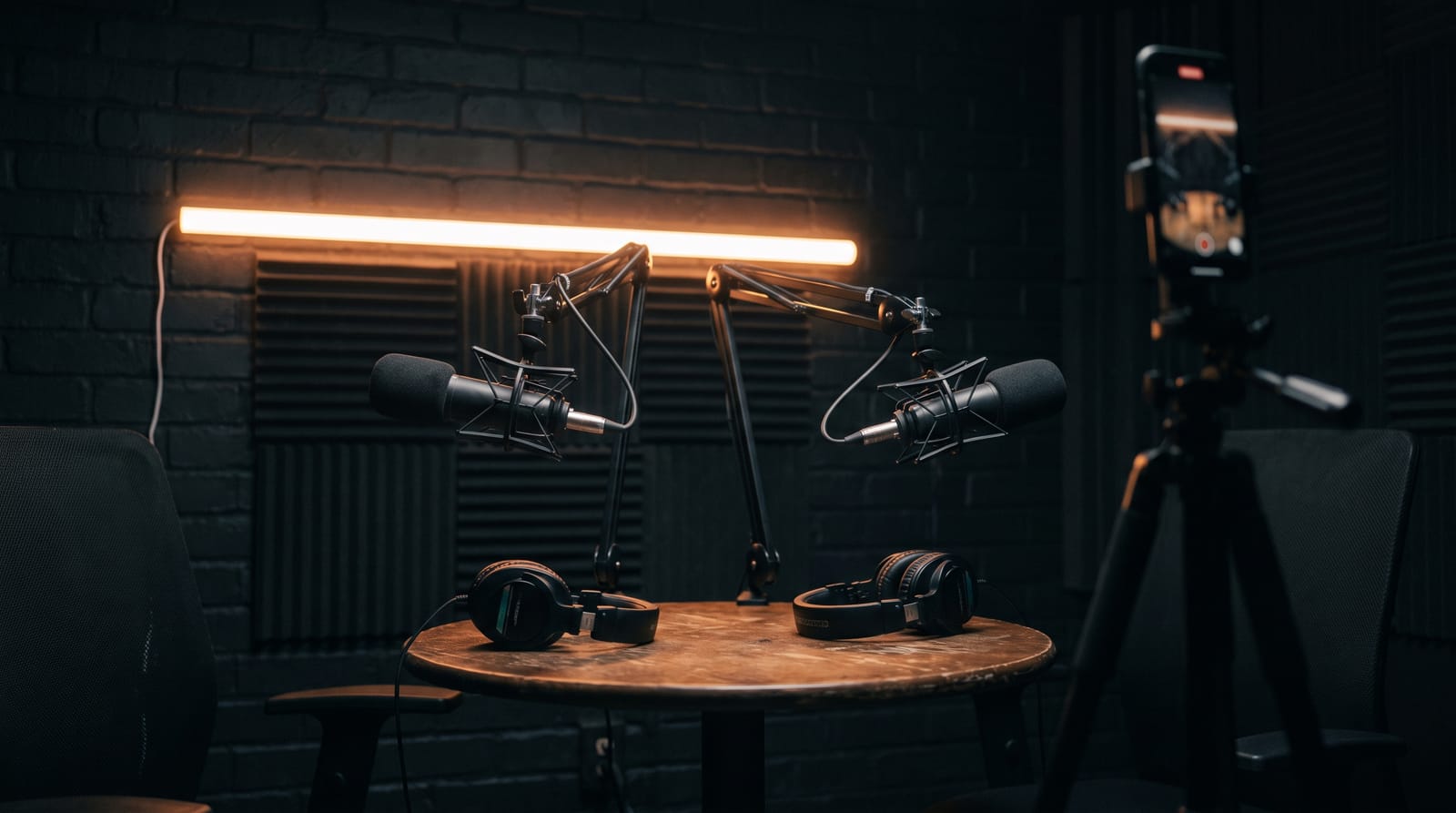
AI Podcast Generator: From a Topic to a Two-Host Video Reel
A video podcast usually means two people, mics, cameras and an editor. An AI podcast generator turns a single topic into a finished two-host vertical reel. Here is how.

Reusable AI Characters: Create a Persona Once, Use It Everywhere
Build your brand's own recurring AI creator once — a locked synthetic face, a voice and a look — and feature the same character in every video, image, podcast and UGC ad you generate. Here is why that changes brand content.

How to Write AI Video Prompts That Actually Work
The gap between a great AI video and a generic one is usually the prompt. Here is how to write text-to-video prompts that get you the shot you pictured.

Free vs Paid AI UGC Tools: What You Actually Give Up
Almost every AI UGC tool has a free tier. The real question is not price — it is what the free version quietly takes away. Here is the honest breakdown.

AI UGC vs a Real Photoshoot: When Each One Wins
Should an ecommerce brand replace its photoshoots with AI? The honest answer is: for some shots, yes — for others, not yet. Here is where each one wins.

Building a Consistent Brand Across 100 AI Videos
Making one good AI video is easy. Making a hundred that all feel like the same brand is the real challenge. Consistency is a system, not a setting.

AI Lip-Sync: Why It Makes or Breaks Talking-Head Video
Nothing exposes an AI video faster than a mouth that does not match the words. Here is why lip-sync is hard, what good sync looks like, and where it matters most.

How to Keep an AI Character or Product Consistent Across Every Scene
The number-one problem with AI video is drift — the face or product changes every cut. Here is how a single reference image keeps it locked across scenes.
AI Voiceover for Product Videos: Narration That Actually Fits
Silent social video leaves conversions on the table. Here is how AI voiceover adds narration that matches each scene — and never gets cut off mid-sentence.

How AI UGC Video Generators Work (and Why They Convert)
A plain-English look at how AI UGC video generators turn a single prompt into a finished, on-brand reel — and why that format outperforms polished ads.

AI Scene Planning: From a One-Line Topic to a Shot List
Most AI video tools jump straight to rendering. The good ones plan first. Here is how AI scene planning turns a one-line topic into a coherent shot list.

The Vertical 9:16 Playbook for TikTok and Reels
Vertical 9:16 is the native format for TikTok, Reels and Shorts. Here is a practical playbook for producing it at scale without re-cropping landscape footage.

Building a Repeatable UGC Content Workflow for Agencies
One-off videos do not scale. Here is how agencies turn AI UGC generation into a productized, repeatable workflow that ships client variants in minutes.